
61/?
1853
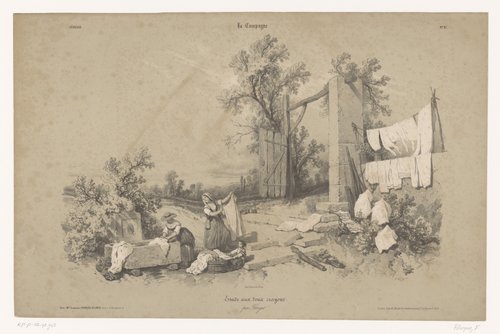
Medium
chalk lithograph
Dimensions
484; 314
Rights
Public Domain
About this artwork
blad: hoogte 314 mm x breedte 484 mm
Art Historical Context
"61/?" is a chalk lithograph created by Fortuné Féio in 1853, measuring 314 mm in height by 484 mm in width. This enigmatic title hints at its place within a larger series—perhaps the 61st installment of an unknown collection—inviting visitors to ponder its narrative role. Férogio, a mid-19th-century artist, employed this medium during a golden age of printmaking, when lithography bridged fine art and mass reproduction. Chalk lithography, a refined technique using soft, greasy crayons on polished lithographic stone, allowed for delicate tonal gradations and expressive lines far surpassing earlier printing methods. Invented in the late 18th century, it flourished by the 1850s, enabling artists like Férogio to produce detailed images efficiently for posters, illustrations, and books. The medium's versatility captured subtle textures and atmospheres, making art more accessible to a growing public amid Europe's industrial and cultural shifts. In the context of 1853 France, under the Second Empire, such works reflected a vibrant era of theater, satire, and urban life. Though specifics of "61/?" remain mysterious, its preservation highlights lithography's enduring legacy in democratizing visual culture, offering a window into 19th-century creativity.