
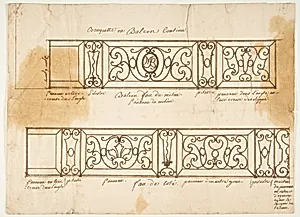
Two Designs for Iron Balconies
19th century
Medium
Pen and brown ink
Dimensions
sheet: 8 5/16 x 11 3/8 in. (21.1 x 28.9 cm)
Classification
Drawings|Ornament & Architecture
Department
Drawings and Prints
Museum
Metropolitan Museum of Art, New York, NY
Credit
The Elisha Whittelsey Collection, The Elisha Whittelsey Fund, 1949
Accession Number
49.50.153
Rights
Public Domain
Tags
Art Historical Context
Step into the intricate world of 19th French architectural design with *Two Designs for Iron Balies*, an anonymous pen and brown ink drawing from the Elisha Whittelsey Collection at The Metropolitan Museum of Art. a modest 8 5/16 x 11 3/8 inches, this sheet captures two elegant proposals for wrought-iron balconies, showcasing the era's fascination with ornate metalwork that adorned urban facades. In 19th-century France, particularly amid Paris's sweeping renovations, iron balconies evolved from mere structural elements into symbols of sophistication and craftsmanship. Classified under Drawings and Prints as Ornament & Architecture, this work exemplifies the preparatory sketches that guided blacksmiths and architects, blending functionality with decorative flair. The medium of pen and brown ink—precise and versatile—allowed the anonymous artist to render fine lines and subtle textures, evoking the delicate filigree and scrolling motifs typical of the period's ironwork. These designs offer a glimpse into the cultural vibrancy of French cities, where balconies served as both practical overlooks and artistic statements, enhancing the street-level spectacle of grand boulevards. A charming testament to everyday elegance in historical architecture!
About the Artist
Anonymous, French, 19th century · 1800–1900
**Anonymous, French, 19th Century (ca. 1800–1900)** The artist cataloged as Anonymous, French, 19th century embodies the enigmatic yet essential contributions of unidentified creators to France's vibrant 19th-century art world. Active roughly between 1800 and 1900, this figure—or potentially collective workshop—produced a diverse array of works amid the nation's transition from Neoclassicism thro...