
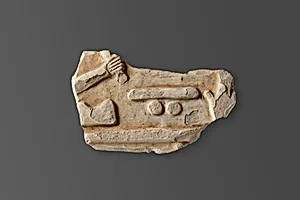
Two Fragments of an Offering Inscription
Unknown Artist
ca. 2100–2090 B.C.
Medium
Limestone
Dimensions
H. 9 × W. 14 × D. 3.2 cm (3 9/16 × 5 1/2 × 1 1/4 in.)
Classification
Relief fragment (1 of 2), tomb of Mereri perhaps
Period
Old Kingdom–First Intermediate Period
Department
Egyptian Art
Museum
Metropolitan Museum of Art, New York, NY
Credit
Gift of Egypt Exploration Fund, 1898
Accession Number
98.4.78a
Rights
Public Domain
Art Historical Context
These delicate limestone fragments, dating to around 2100–2090 B.C., hail from Egypt's Old Kingdom–First Intermediate Period possibly Dynasties 7–10. Carved with hieroglyphic inscriptions, they formed part of a larger offering text, likely dedicated to provisioning the deceased or deities in the afterlife. At just 9 cm high and 14 cm wide, their modest size belies their ancient origins, preserved as a gift to the Metropolitan Museum of Art from the Egypt Exploration Fund in 1898. This turbulent era marked the decline of the Old Kingdom's grandeur, with political fragmentation and famine challenging pharaonic authority. Offering inscriptions like these were vital tomb accompaniments, ritually ensuring eternal sustenance through lists of bread, beer, and oxen—magical words believed to manifest real provisions. Crafted from durable limestone, a staple medium for such memorials, the fragments showcase precise chisel work, where shallow reliefs allowed text to endure millennia. Though incomplete, these pieces offer a glimpse into everyday religious practices amid societal upheaval, reminding us how ancient Egyptians inscribed hope for immortality on humble stone. A testament to resilience, they bridge the pyramids' opulence with humbler commemorations.