
Two Riddles of the Queen of Sheba
Unknown Artist
ca. 1490–1500
Medium
Linen warp; wool, linen and metallic wefts
Dimensions
31 1/2 in. × 40 in. (80 × 99.7 cm) Plexi Mount: 35 1/2 × 43 × 2 5/8 in. (90.2 × 109.2 × 6.7 cm)
Classification
Textiles-Tapestries
Culture
Upper Rhenish
Department
The Cloisters
Museum
Metropolitan Museum of Art, New York, NY
Credit
The Cloisters Collection, 1971
Accession Number
1971.43
Rights
Public Domain
Tags
Art Historical Context
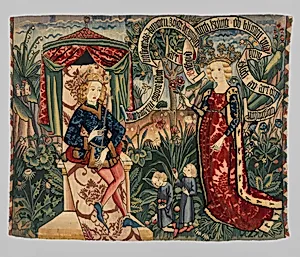
This exquisite tapestry, *Two Riddles of the of Sheba*, hails from the Upper Rhenish region around 1490–1500, a time when late Gothic artistry flourished along the Rhine Valley in present-day Germany and Switzerland.oven in The Cloisters Collection at the Metropolitan Museum of Art, captures a pivotal biblical episode from the Old Testament: the Queen of Sheba's famed visit to King Solomon, she tests his wisdom with clever riddles. Vivid figures of kings, queens, men, and women populate the scene, surrounded by symbolic motifs like blooming roses and ripe apples, evoking themes of wisdom, fertility, and divine judgment. Crafted with a linen warp and intricate wefts of wool, linen, and shimmering metallic threads, the tapestry exemplifies the technical mastery of Rhenish weavers. These luxurious materials created rich textures and luminous effects, making such pieces prized status symbols for nobility and clergy. Measuring about 31½ × 40 inches, it was likely designed for a domestic or ecclesiastical setting, where its narrative depth invited contemplation. As a rare survivor from the late medieval period, this work highlights the enduring cultural fascination with Solomon's legendary encounter, blending piety with opulent decoration. Today, it offers visitors a window into the spiritual and artistic world of Renaissance-era Europe.