
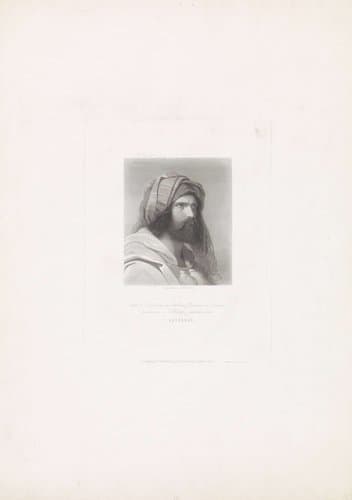
Uit de Schilderij voorstellende Johannes de Dooper predikende in de Woestijn, geschilderd door C. Kruseman
1852
Medium
steel engraving
Dimensions
184; 252
Rights
Public Domain
About this artwork
plaatrand: hoogte 252 mm x breedte 184 mm
Art Historical Context
This steel engraving, titled *Uit de Schilderij voorstell Johannes de Dooper predende in de Woest, geschilderd door. Kruseman* (From the Painting Depicting John the Baptist Pre in the Wilderness, Painted C. Kruseman), was created by Benoit Taurel in 1852. Measuring 252 mm high by 184 mm wide, it faithfully reproduces a biblical scene from Cornelis Kruseman's oil painting. Kruseman, a Dutch Romantic artist (1797–1859), specialized in dramatic history paintings infused with emotion and grandeur, capturing the prophet John the Baptist's fervent call to repentance amid a stark desert landscape. Steel engraving, the chosen medium, marked a technological leap in 19th-century printmaking. Unlike fragile copper plates, steel allowed for intricate detailing—fine lines for textures like rugged robes and windswept sands—and mass production, making high-quality art accessible to a broader audience through books, portfolios, and affordable reproductions. Taurel's skilled translation preserved Kruseman's Romantic intensity, emphasizing light and shadow to evoke spiritual fervor. Produced during the Dutch Romantic era, this print reflects mid-19th-century fascination with biblical narratives as moral and emotional touchstones. It bridged elite painting with public devotion, inviting viewers to ponder themes of wilderness isolation and divine prophecy in an age of rapid industrialization. A testament to reproductive art's cultural role, it brings Kruseman's vision to life for modern audiences.