
Uitbreken van de Belgische revolutie
Medium
striking (metalworking)
Dimensions
4.1; 32.28
Rights
Public Domain
About this artwork
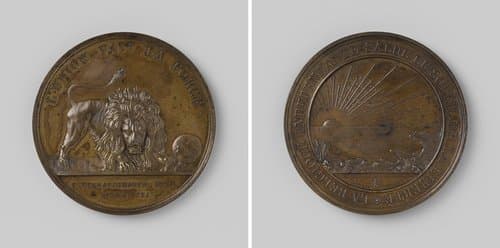
Bronzen penning. Voorzijde: woedende leeuw verbreekt ketenen, die hem aan wereldbol kluisteren binnen omschrift; afsnede: signatuur. Keerzijde: opkomende zon beschijnt Belgische kust binnen omschrift; afsnede: signatuur onderbroken door leeuwtje met vrijheidsstaf
Art Historical Context
**Uitbreken van de Belgische revolutie (Outbreak of the Belgian Revolution)** Created in 1830 by Adrien Hippolyte Veyrat this bronze medal—measuring just 4.1 cm in diameter weighing 32.28 grams—captures a pivotal moment through the intimate art of metal striking. Veyrat, a skilled medallist, signed both the obverse and reverse edges, showcasing the precision of this technique where intricate designs are hammered or pressed into metal for sharp relief and enduring detail. Such small-scale works were popular in the 19th century as emblems of history, blending sculpture's depth with coin-like portability. On the obverse, a furious Belgian lion dramatically shatters its chains, shackled to a globe, symbolizing the nation's fierce break from Dutch rule. The reverse depicts a rising sun bathing the Belgian coastline in light, evoking renewal and freedom, with a small lion holding a liberty staff interrupting Veyrat's signature—a clever nod to revolutionary spirit. Struck amid the 1830 Belgian Revolution, which birthed modern Belgium from the United Kingdom of the Netherlands, this medal served as patriotic propaganda and personal memento. Its vivid allegory of liberation highlights Romantic-era symbolism, making it a tiny yet powerful testament to a people's quest for independence. Visitors, imagine carrying this spark of history in your pocket! (198 words)