
Unknown
1855
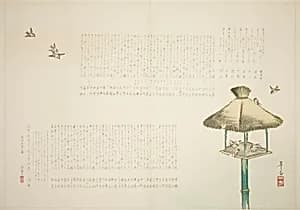
Medium
Color woodblock print; surimono
Classification
Department
Arts of Asia
Museum
Art Institute of Chicago
Accession Number
103319
Rights
Public Domain
Art Historical Context
This exquisite color woodblock print, created in 1855, hails from Japan's late Edo period—a time when ukiyo-e, or "pictures of the floating world," captured the vibrant ephemera of urban life, theater, and nature. Classified as a surimono, this privately commissioned print stands out for its luxurious production, often made for elite occasions like New Year's celebrations or poetry gatherings. Held in the Art Institute of Chicago's Arts of Asia department, it exemplifies the refined craftsmanship of Japanese printmaking just before the Meiji Restoration transformed the nation. Surimono prints like this one were technically masterful, using multiple woodblocks inked with vivid pigments, mica for shimmer, and techniques like embossing (karazuri) and gauffering for tactile gold edges. Smaller than standard ukiyo-e, they prioritized poetic elegance over mass appeal, frequently incorporating haiku or kyōka verses amid delicate motifs of flowers, festivals, or mythical scenes. The medium's significance lies in its blend of art and literature, bridging visual beauty with Japan's waka poetry tradition. Though the artist and title remain unknown, this 1855 gem offers a window into Edo Japan's cultural sophistication, where printmakers elevated everyday paper into treasures. Visitors, imagine holding such a bespoke artwork—its subtle textures still whispering of cherry blossoms and lantern-lit nights.
About the Artist
Unknown
The artist designated as "Unknown" in our virtual museum's collection exemplifies a poignant chapter in art history: creators whose identities have faded into obscurity despite the enduring power of their work. With only one known artwork attributed to them in our holdings, this figure represents countless anonymous hands that shaped visual culture across centuries. Museums worldwide, including th...