
Untitled
1839/99
Medium
Ambrotype
Dimensions
Plate: 6.4 × 5.1 cm (2 9/16 × 2 1/16 in.); Case: 8 × 6.8 × 2.1 cm (3 3/16 × 2 11/16 × 7/8 in.)
Classification
ambrotype
Department
Photography and Media
Museum
Art Institute of Chicago
Accession Number
150481
Rights
Public Domain
Art Historical Context
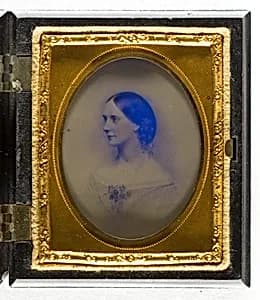
This untitled ambrotype from the Art Institute of Chicago captures the intimate scale of mid-19th-century photography Measuring just 6.4 × 5.1 cm on its glass plate and housed in a protective case of 8 × 6.8 × 2.1 cm, it exemplifies the compact, personal format prized by families and collectors during photography's formative years (ca. 1839–1899). Ambrotypes, introduced around 1854, marked a pivotal advancement in the wet-collodion process. Unlike earlier daguerreotypes, which required mercury vapors and produced fragile silvered plates, ambrotypes created a one-of-a-kind positive image by underexposing a glass negative and backing it with black lacquer or velvet. This technique made portraits more affordable and durable, democratizing photography for the growing middle class. Though the artist remains unknown, the work reflects the era's technical ingenuity and cultural shift toward preserving everyday moments. Housed in the museum's Photography and Media department, this piece invites us to ponder the anonymous lives it may have documented—perhaps a cherished family member—highlighting photography's role in bridging personal memory and historical record.
About the Artist
Unknown
The artist designated as "Unknown" in our virtual museum's collection exemplifies a poignant chapter in art history: creators whose identities have faded into obscurity despite the enduring power of their work. With only one known artwork attributed to them in our holdings, this figure represents countless anonymous hands that shaped visual culture across centuries. Museums worldwide, including th...