
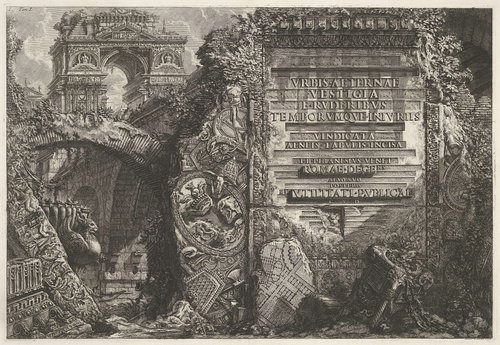
Urbis aeternae vestigia e r uderibus temporumque iniriis vindicata aeneis tabulis incisa I. B. Pranesius Venet Romae degens aevo suo posteris et utilitati publicae C.V.D.
ca. 1756 - ca. 1757
Medium
etching
Dimensions
680; 465
Rights
Public Domain
About this artwork
verzamelaarsmerk, verso, gestempeld: Lugt 2228
Art Historical Context
Behold *Urbis aeternaeigia e rudibus temporumque iniuriis vindicata aene tabulis incisa*, masterful etching by Giovanni Battista Piranesi, created around 1756–1757. This grand work (465 × 680 mm) captures Piranesi's lifelong obsession with Rome's ancient glory. The evocative Latin title translates to "Traces of the eternal rescued from the ruins andages of time, engraved copper plates," signed by the Venetian artist then residing in Rome. It promises these rediscovered fragments to posterity and public benefit—a bold declaration of his mission to revive antiquity through art. Piranesi, a pioneer of the veduta (view) genre with Romantic flair, produced this during the height of the Grand Tour era, when European elites flocked to Rome for its ruins. His etchings, part of series like *Le Antichità Romane*, blend meticulous archaeological accuracy with dramatic imagination, evoking the sublime power of decayed empires. The verso bears a collector's mark (Lugt 2228), hinting at its prized status among connoisseurs. As an etching, the piece showcases Piranesi's virtuoso technique: dense cross-hatching builds shadowy depths and intricate details, immersing viewers in a timeless dialogue between past and present. A testament to 18th-century neoclassicism, it inspires awe at Rome's enduring legacy.
About the Artist
Giovanni Battista Piranesi · 1720–1778
Giovanni Battista Piranesi (1720–1778) was an Italian printmaker, architect, and antiquarian whose visionary etchings of Rome and imaginary prisons revolutionized architectural representation and profoundly influenced both Neoclassicism and Romanticism. Piranesi stands as one of the most important printmakers of the eighteenth century, fundamentally shaping European perceptions of ancient Rome an...