
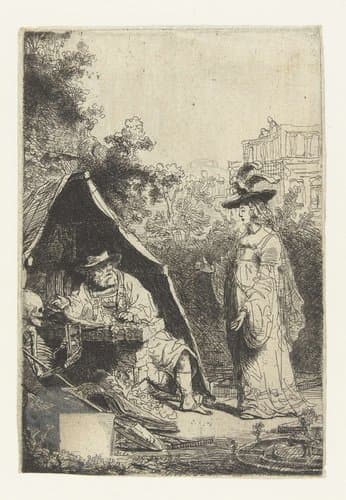
Uur van de Dood
1642 - 1644
Medium
etching
Dimensions
133; 90
Rights
Public Domain
About this artwork
plaatrand: hoogte 133 mm x breedte 90 mm
Art Historical Context
**Uur van de Dood (Hour of Death)** Etching by Ferdinand Bol,1642–1644* *Plate: 133 × 90 mm* Ferdinand Bol, a prominent Dutch artist of the Golden Age and a favored pupil of Rembrandt van Rijn, created *Uur van de Dood* during his early career in Amsterdam. Dated between 1642 and 1644, this intimate etching captures the somber theme suggested by its title—"Hour of Deathlikely evoking memento mori motifs popular in 17th-century Northern Europe. These reminders of mortality, often featuring skulls, hourglasses, or extinguished candles, reflected the era's preoccupation with life's transience amid prosperity and plague. As an etching, the work showcases Bol's mastery of intaglio printmaking, where acid etches intricate lines into a metal plate for rich, tonal depth. At just 133 by 90 mm, its small scale made it ideal for personal collections, allowing collectors to ponder profound themes up close. Influenced by Rembrandt's dramatic chiaroscuro, Bol's style blends emotional intensity with precise detail, bridging painting and print traditions. This piece highlights the Dutch Golden Age's innovative print culture, where artists like Bol democratized high art through affordable reproductions. A poignant survivor from Bol's formative years, it invites visitors to reflect on time's fleeting nature—just as it did for 17th-century audiences.
About the Artist
Ferdinand Bol · 1616–1680
As a very young man, Bol moved to Amsterdam, where he worked under the direction of Rembrandt, with whom he formed a friendship. Comment on works: Religious; History; Portraits