
Valkenier en metgezel
1483 - 1487
Medium
drypoint
Dimensions
72; 124
Rights
Public Domain
About this artwork
height 124 mm x width 72 mm
Art Historical Context
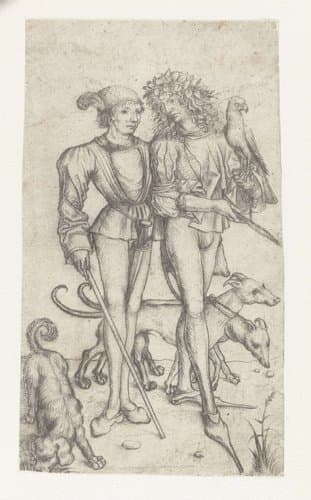
### Valkenier en Metge (Falconer and Companion) Created between 1483 and 1487 by the enigmatic *Meester van het Amsterdam Kabinet*—an anonymous Netherlandish artist named for a famed collection of his prints—this intimate drypoint measures just 124 mm high by 72 mm wide. The title evokes a falconer and his companion, capturing a moment from the elite world of falconry, a sport symbolizing nobility and mastery over nature in late medieval Europe. These tiny works were prized by collectors, offering glimpses into daily aristocratic life during the Northern Renaissance's early stirrings. What sets this piece apart is its pioneering use of drypoint, a technique where the artist scratches directly into a copper plate, raising a soft burr that yields rich, velvety lines unlike the crisp precision of contemporary engravings. Rarely employed in the 15th century, drypoint's textured depth suited the Master's specialty: miniature genre scenes brimming with intricate detail. Produced in the prosperous Low Countries amid burgeoning print culture, it reflects how art democratized luxury imagery, bridging Gothic traditions and the coming Renaissance humanism. This gem invites us to marvel at its scale—hold it close, and a world unfolds in whispers of ink and copper.