
Vanitas stilleven
ca. 1660 - ca. 1665
Medium
oil on canvas
Dimensions
63.5; 73; 7
Rights
Public Domain
About this artwork
support: height 63.5 cm x width 73 cm
Art Historical Context
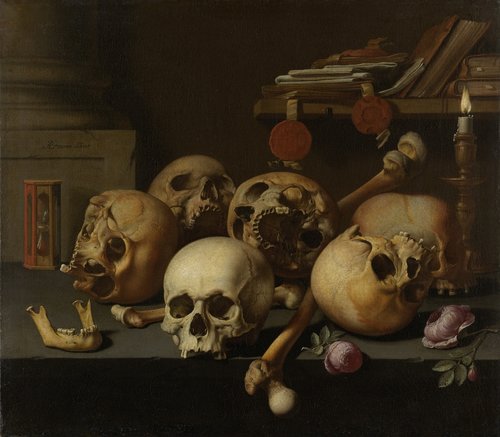
**Vanitas Stilleven** by Aelbert Jansz van der Schoor, created around 1660–1665, is a captivating example of Dutch Golden Age still painting. Rendered in oil on canvas (63.5 × 73 cm), this now resides in the renowned Rijksmuseum in Amsterdam. Van der Schoor, a lesser-known but skilled artist from Rotterdam active in the mid-17th century, specialized in intricate compositions that blend realism with profound symbolism. The title *Vanitas Stilleven* reveals its core theme: a *vanitas* still life, a popular genre in the Netherlands during this prosperous era. These paintings served as *memento mori*—reminders of life's fleeting nature—often featuring skulls, wilting flowers, or timepieces to underscore mortality and the vanity of worldly pursuits. Oil on canvas allowed van der Schoor to achieve luminous textures and meticulous detail, hallmarks of Dutch mastery in capturing light and shadow. Housed in the Rijksmuseum, this piece highlights the cultural obsession with introspection amid economic boom times. It invites visitors to pause and reflect, much like 17th-century viewers, on the balance between beauty and impermanence in art and life.