
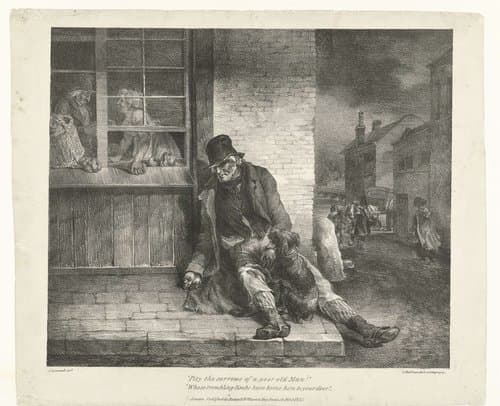
Various subjects drawn from life
1821 - 1821-02-01
Medium
lithography
Dimensions
442; 376; 370; 318
Rights
Public Domain
About this artwork
collector's mark: Lugt 2760
Art Historical Context
Théodore Géricault's *Various Subjects Drawn from Life* (1) offers a glimpse into the French Romantic master's fascination with direct observation. Created just three years before his untimely death at age 32, this lithograph captures the artist's shift toward intimate, preparatory studies amid his fame for monumental works like *The Raft of the Medusa* (9). At 318 × 376 mm, its modest scale belies Géricault's bold energy, reflecting Romanticism's emphasis on emotion, movement, and the raw vitality of everyday motifs drawn straight from life. Lithography, a revolutionary printing technique Géricault helped popularize in France, allowed for fluid, expressive lines that mimicked drawing. By drawing directly on a lithographic stone with greasy crayon, artists like him could produce multiple impressions with remarkable spontaneity—ideal for studies of horses, figures, or urban scenes. This medium democratized art, bridging elite painting with broader audiences during the post-Napoleonic era. Bearing the collector's mark Lugt 2760 (likely from a distinguished 19th-century connoisseur), this print underscores Géricault's enduring legacy in graphic arts. It invites us to appreciate his eye for unpolished truth, foreshadowing Realism's rise. A testament to his restless genius, it reminds visitors of art's power to distill life's fleeting moments.
About the Artist
Théodore Géricault · 1791–1824
Théodore Géricault (1791-1824) stands as one of the most influential pioneers of French Romanticism, despite a career tragically cut short at age thirty-two. Born in Rouen on September 26, 1791, into a wealthy family, Géricault's brief but intense artistic life transformed the trajectory of nineteenth-century European painting. Géricault began his formal training in 1808 under Carle Vernet, maste...