
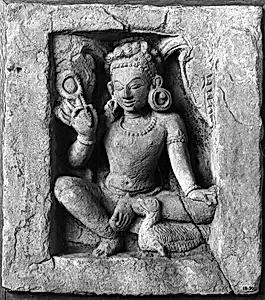
Varuna Holding a Noose and Riding a Swan
Unknown Artist
6th–8th century
Medium
Sandstone
Dimensions
H. 12 1/2 in. (31.8 cm); W. 11 in. (27.9 cm); D. 3 in. (7.6 cm)
Classification
Sculpture
Culture & Period
India · post Gupta period
Department
Asian Art
Museum
Metropolitan Museum of Art, New York, NY
Credit
Rogers Fund, 1919
Accession Number
19.90
Rights
Public Domain
Tags
Art Historical Context
This exquisite sandstone sculpture from India's post-Gupta period (6th–8th century) depicts Varuna, the Vedic god of waters, cosmic order, and the sky. Carved in high relief, the deity is shown dynamically riding a swan—his rare vahana (divine mount)—while wielding a noose (pasha), a symbol of his power to bind chaos and enforce dharma (cosmic law). Measuring just 12½ inches tall, 11 inches wide, and3 inches deep, its compact form suggests it may have adorned a temple niche or served as a devotional object, capturing the god's regal poise amid flowing waters evoked by stylized carving. Crafted during a transitional era after the Gupta Empire's golden age of art, this piece reflects the period's regional stylistic evolution, with intricate detailing in the swan's feathers, Varuna's jewelry, and draped garments showcasing masterful sandstone carving techniques. Post-Gupta sculptors favored durable local stone, allowing for fine incision and polished surfaces that highlight divine grace. The swan's prominence underscores symbolic themes of purity and transcendence in Hindu iconography. Acquired through the Rogers Fund in 1919, this rare representation at The Metropolitan Museum of Art offers visitors a window into early medieval Indian devotion, where gods like Varuna bridged Vedic roots and emerging temple traditions. A testament to anonymous artistry, it invites contemplation of the divine harnessing nature's forces.