
Vase
Unknown Artist
probably 19th century
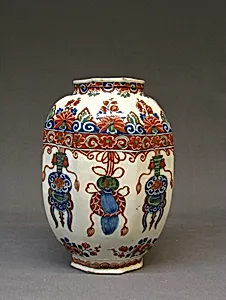
Medium
Tin-glazed earthenware
Dimensions
Height: 8 in. (20.3 cm)
Classification
Ceramics-Pottery
Culture
Dutch, Delft
Department
European Sculpture and Decorative Arts
Museum
Metropolitan Museum of Art, New York, NY
Credit
Gift of Henry G. Marquand, 1894
Accession Number
94.4.97
Rights
Public Domain
Tags
Art Historical Context
This charming tin-glazed earthenware vase standing at 8 inches tall, hails from Delft, Netherlands, likely crafted in the 19th century. Produced by an unknown artisan, it exemplifies Delftware—a beloved Dutch ceramic tradition that peaked in the 17th and 18th centuries but continued into the 1800s. Delft potters mastered tin-glazing, a technique where a tin-oxide coating creates a brilliant white surface ideal for vibrant painted decorations, mimicking expensive Chinese porcelain at a more accessible price. This innovation made Delftware a staple in European households, adorning tables and shelves with everyday elegance. The vase's delicate motifs of bees and flowers, rendered in colorful enamels, evoke the natural world, symbolizing industry, pollination, and the beauty of blooming gardens—themes popular in Dutch decorative arts. Such pastoral designs reflected the era's fascination with botany and the countryside, blending functionality with artistry. Gifted to the Metropolitan Museum of Art in 1894 by Henry G. Marquand, a prominent collector, this piece now resides in the European Sculpture and Decorative Arts department, offering visitors a tangible link to Holland's rich ceramic heritage.