
Vase
Medium
Soft-paste porcelain
Dimensions
Height: 10 1/4 in. (26 cm)
Classification
Ceramics-Porcelain
Culture
British, Chelsea
Department
European Sculpture and Decorative Arts
Museum
Metropolitan Museum of Art, New York, NY
Credit
Gift of Mr. and Mrs. Howard Eric, 1940
Accession Number
40.177
Rights
Public Domain
Tags
Art Historical Context
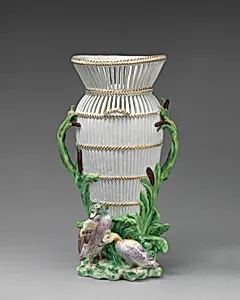
This elegant vase from the Chelsea Por Manufactory, created between 1756 and 1760, exemplifies the height of mid-18th-century British porcelain artistry. Standing at 10¼ inches tall, it is crafted from soft-paste porcelain innovative European substitute for rare Chinese hard-paste porcelain. Chelsea, London's pioneering porcelain factory founded in the 1740s, mastered this frit-based material, firing it at lower temperatures to achieve a creamy translucency prized by collectors. During the factory's "gold anchor" period (c. 1756–1769), pieces like this vase featured exquisite hand-painted enamels and raised gilding, often depicting naturalistic motifs such as ducks amid floral or scenic grounds. These designs reflected the Rococo taste for whimsy and nature, blending technical virtuosity with decorative flair. Soft-paste allowed for delicate molding and vibrant colors, making Chelsea wares status symbols in aristocratic homes. A generous gift to the Metropolitan Museum of Art in 1940 from Mr. and Mrs. Howard Eric, this vase highlights Britain's brief but brilliant porcelain rival to Meissen and Sèvres, capturing a golden era of European decorative arts before the factory closed in 1769.
About the Artist
Chelsea Porcelain Manufactory · 1744–1784
**Chelsea Porcelain Manufactory** The Chelsea Porcelain Manufactory, Britain's pioneering porcelain enterprise, was founded around 1743 in Chelsea, London, by two Huguenot silversmiths: Nicholas Sprimont from Liège and Charles Gouyn. Sprimont, trained in Paris as a goldsmith before immigrating to England, brought his expertise in luxury metalwork to the venture, while Gouyn handled early sales th...