
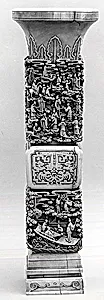
Vase
Unknown Artist
Medium
Ivory
Dimensions
H. 19 in. (48.3 cm); W. 5 5/8 in. (14.3 cm); Diam. 4 7/8 in. (12.4 cm)
Classification
Ivories
Culture & Period
China · Qing dynasty (1644–1911), Kangxi period (1662–1722)
Department
Asian Art
Museum
Metropolitan Museum of Art, New York, NY
Credit
Gift of Mr. and Mrs. Earl Morse, 1955
Accession Number
55.155.2
Rights
Public Domain
Tags
Art Historical Context
This exquisite ivory vase, standing nearly 19 inches tall, hails from China's Qing dynasty during the Kangxi (1662–1722), a golden age of artistic refinement under Emperor Kangxi's patronage. Crafted from a single elephant tusk—turned on a lathe for its graceful, elongated form—the vase exemplifies the virtuoso carving techniques of imperial workshops. Its slender height (48.3 cm) and modest width (14.3 cm) highlight material's precious scarcity, reserved for elite collectors and symbolizing luxury and technical mastery. Adorned with intricate relief carvings of human figures and boats, the vase likely depicts lively scenes of river life or mythical voyages, common motifs in Kangxi-era ivories that blended realism with poetic storytelling. Ivory carving reached new heights in this period, with artisans employing fine tools to create delicate textures and dynamic compositions on a challenging, curved surface. These works not only showcased superlative craftsmanship but also reflected China's cultural reverence for harmony between humans and nature. A generous gift to the Metropolitan Museum of Art from Mr. and Mrs. Earl Morse in 1955, this anonymous masterpiece invites us to marvel at the anonymous genius behind Qing opulence, bridging artistry and history.