
Vase
Unknown Artist
6th–7th century
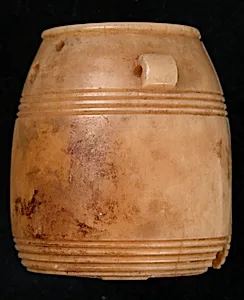
Medium
Bone; carved
Dimensions
H. 1 3/4 in. (4.5 cm) Diam. 1 9/16 in. (3.9 cm)
Classification
Ivories and Bone
Department
Islamic Art
Museum
Metropolitan Museum of Art, New York, NY
Credit
Gift of J. Pierpont Morgan, 1917
Accession Number
17.190.61
Rights
Public Domain
Art Historical Context
This delicate carved bone vase, dating to the 6th–7th century, exemplifies exquisite craftsmanship of early Islamic art Standing just 1 3/4 inches (4.5 cm) tall with a diameter of 19/16 inches (3.9 cm), its petite scale suggests it was a luxury item, perhaps used for perfumes, spices, or as a decorative vessel in elite households. Crafted from bone—a material prized for its fine grain and workability—the vase showcases the intricate carving techniques prevalent in the Islamic world, where artisans transformed organic materials into polished, detailed objects. In the Department of Islamic Art at The Metropolitan Museum of Art, this piece highlights the transitional artistry of the late antique to early Islamic period, bridging Byzantine, Sassanian, and emerging Arab influences. Bone carving was a specialized skill, often reserved for small-scale works that demonstrated precision and patience, as larger stone or metal alternatives were less feasible for such intimate designs. Its survival underscores the durability of these everyday treasures. A generous gift from J. Pierpont Morgan in 1917, the vase invites us to marvel at the anonymous artist's mastery, offering a tangible link to a vibrant era of cultural fusion and innovation.