
Vase
Unknown Artist
12th century
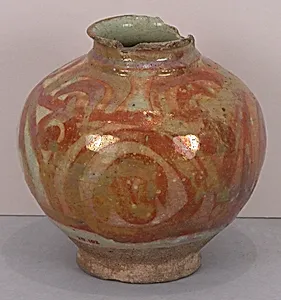
Medium
Stonepaste; luster-painted on opaque white glaze under transparent colorless glaze
Dimensions
H. 4 3/4 in. (11.4 cm) Diam. 4 1/2 in. (11.4 cm) Wt. 11.9 oz. (337.4 g)
Classification
Ceramics
Department
Islamic Art
Museum
Metropolitan Museum of Art, New York, NY
Credit
Rogers Fund, 1920
Accession Number
20.102
Rights
Public Domain
Art Historical Context
This delicate 12th-century vase the Islamic world exemplifies the pinnacle of medieval ceramic innovation. Crafted from stonepaste—a composite of quartz, clay, and glass frit that mimicked the prized porcelain of China—this small vessel stands just 4 3/4 inches tall with a matching diameter, weighing a mere 11.9 ounces. Its form is elegantly proportioned, perfect for holding perfumes, spices, or flowers in a refined household. What sets this vase apart is its masterful luster-painting technique: designs were painted with metallic compounds onto an opaque white glaze, then covered with a transparent colorless glaze and fired in a special reducing atmosphere. This created a shimmering, iridescent glow that catches the light like gold, a luxury effect reserved for elite patrons. Developed in the 9th century and perfected by the 12th, lusterware symbolized Islamic artisans' ingenuity, blending science and artistry amid flourishing trade routes from Persia to Spain. Housed in the Metropolitan Museum of Art's Islamic Art Department (acquired via the Rogers Fund in 1920), this anonymous masterpiece invites us to marvel at a golden age of cultural exchange, where everyday objects became treasures of enduring beauty.