
Vase
Unknown Artist
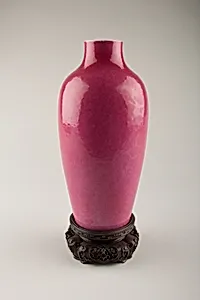
Medium
Porcelain
Dimensions
H. 8 1/4 in. (21 cm)
Classification
Ceramics
Culture & Period
China · Qing dynasty (1644–1911), Qianlong period (1736–95)
Department
Asian Art
Museum
Metropolitan Museum of Art, New York, NY
Credit
Bequest of Benjamin Altman, 1913
Accession Number
14.40.109
Rights
Public Domain
Art Historical Context
This elegant porcelain vase hails from China's Qing dynasty during the Qianlong period (6–95), a era of imperial artistry renowned for its technical mastery and aesthetic refinement. Produced likely at the famed Jingdezhen kilns, the epicenter of Chinese porcelain production, such vessels exemplified the period's pinnacle of ceramic innovation. Standing at a modest 8¼ inches (21 cm) tall, its form reflects the Qing court's taste for balanced proportions and subtle elegance, often used for floral arrangements or as display pieces in scholarly studios and elite households. Porcelain, or "white gold," held immense cultural significance in imperial China, symbolizing purity, luxury, and technological prowess. The Qianlong reign saw unprecedented experimentation with glazes, underglaze blues, and overglaze enamels, though this vase's specific decoration remains a testament to the era's versatility. Exported globally via maritime trade, these wares influenced ceramics worldwide, from Europe to Japan. Acquired through the generous bequest of collector Benjamin Altman in 1913, this piece now graces the Metropolitan Museum of Art's Asian Art department, inviting visitors to ponder the enduring legacy of Qianlong craftsmanship.