
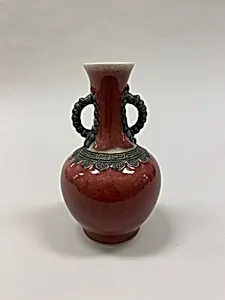
Vase
Unknown Artist
late 18th–19th century
Medium
Porcelain with copper red glaze and relief slip decoration (Jingdezhen ware)
Dimensions
H. 6 3/8 in. (16.2 cm); Diam. 3 3/4 in. (9.5 cm)
Classification
Ceramics
Culture & Period
China · Qing dynasty (1644–1911)
Department
Asian Art
Museum
Metropolitan Museum of Art, New York, NY
Credit
Bequest of Benjamin Altman, 1913
Accession Number
14.40.123
Rights
Public Domain
Art Historical Context
This exquisite porcelain vase, crafted in Jingdezhen—the renowned "porcelain capital" of China—dates to the late 18th to 19th century during the Qing dynasty (164–1911). Standing just 6⅜ inches tall with a 3¾-inch diameter, its compact form belies the technical mastery of the era's potters. Jingdezhen kilns produced some of the world's finest ceramics, supplying imperial courts and global markets with translucent white bodies and innovative glazes. The vase's standout features are its copper red glaze and relief slip decoration. The sang de bœuf (oxblood) red, derived from copper oxide, was notoriously challenging to fire evenly, often yielding a dramatic, crackled surface that evokes molten lava. Relief slip—applied clay paste molded into raised designs—adds tactile depth, likely depicting floral or symbolic motifs common in Qing wares, enhancing both aesthetic appeal and cultural symbolism of prosperity and harmony. A highlight of the Metropolitan Museum of Art's Asian Art collection, this piece entered via the 1913 bequest of collector Benjamin Altman. It embodies Qing porcelain's artistic pinnacle, blending functionality with imperial elegance for scholars, officials, and admirers worldwide.