
Vase (Fang)
Unknown Artist
18th–19th century
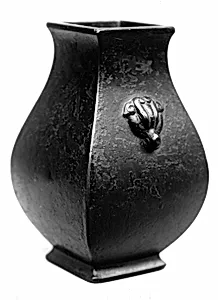
Medium
Bronze
Dimensions
H. 5 1/2 in. (14 cm)
Classification
Metalwork
Culture & Period
China · Qing dynasty (1644–1911)
Department
Asian Art
Museum
Metropolitan Museum of Art, New York, NY
Credit
Bequest of John L. Cadwalader, 1914
Accession Number
14.58.171
Rights
Public Domain
Art Historical Context
This exquisite bronze *Vase (Fang)* from China's Qing dynasty (16441911), dating to 18th–19th century, exemplifies the era's masterful metalwork traditions. Standing just 5½ inches (14 cm) tall, its compact form belies the technical sophistication required to cast and finish such a vessel. The "fang" designation likely refers to its angular, rectangular profile—a nod to ancient Chinese ritual bronzes from the Shang and Zhou dynasties, which Qing artisans revived for decorative and scholarly purposes. During the Qing period, particularly under emperors like Qianlong, there was a fervent interest in antiquity. Artisans produced bronze wares like this to evoke the grandeur of China's Bronze Age, blending historical reverence with imperial opulence. These vases were prized in elite collections for display in studies or altars, symbolizing cultural continuity and connoisseurship amid the dynasty's expansive artistic patronage. Today, housed in the Metropolitan Museum of Art's Asian Art Department thanks to the 1914 bequest of John L. Cadwalader, this piece invites us to appreciate the enduring allure of Chinese metalwork. Its subtle patina whispers stories of craftsmanship across centuries, bridging ancient rituals with Qing-era refinement.