
Vase fragment
Unknown Artist
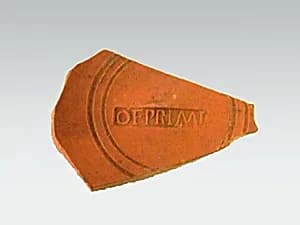
Medium
Terracotta
Dimensions
1 1/4 × 1 3/4 × 1/4 in. (3.2 × 4.5 × 0.7 cm)
Classification
Vases
Culture
Roman, Gaul
Department
Greek and Roman Art
Museum
Metropolitan Museum of Art, New York, NY
Credit
Gift of J. Pierpont Morgan, 1917
Accession Number
17.194.2376
Rights
Public Domain
Art Historical Context
This delicate terracotta vase fragment, from Roman Gaul—a Roman province encompassing much of modern-day France and surrounding regions— a tantalizing glimpse into everyday life in the ancient world. Measuring just 1¼ × 1¾ × ¼ inches, this tiny shard from the Metropolitan Museum of Art's Greek and Roman Art collection the humble yet ubiquitous pottery produced in provincial workshops. Terracotta, a fired clay medium, was prized for its affordability and durability, making it ideal for household vessels used in cooking, storage, and serving. Though the artist and exact date remain unknown, the fragment's classification as a vase underscores the Romans' mastery of wheel-thrown pottery techniques, often adorned with simple motifs or left plain for utilitarian purposes. In Gaul, such wares blended local Celtic traditions with Roman influences, reflecting cultural exchange across the empire. Donated by financier J. Pierpont Morgan in 1917, this piece highlights how even small artifacts preserve stories of trade, craftsmanship, and domestic routines from antiquity. Visitors might marvel at its survival: a fragile remnant enduring millennia, inviting us to imagine the hands that shaped it and the meals it once held.