
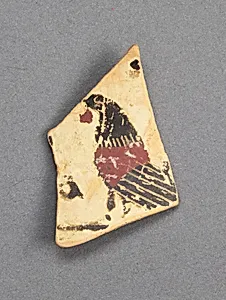
Vase fragment
Unknown Artist
ca. 600–550 BCE
Medium
Terracotta
Dimensions
H. 1 11/16 in. (4.3 cm)
Classification
Vases
Culture & Period
Greek, Laconian · Archaic
Department
Greek and Roman Art
Museum
Metropolitan Museum of Art, New York, NY
Credit
Gift of A. J. B. Wace, 1924
Accession Number
24.195.210
Rights
Public Domain
Art Historical Context
This delicate terracotta vase fragment,ailing from Laconian Greece around 600–550 BCE, a glimpse into the Archaic period's vibrant pottery tradition. Standing just 1 11/16 inches (4.3 cm) tall, it is a modest survivor from the region of Laconia—ancient Sparta's homeland—crafted by an unknown artist. Now housed in the Metropolitan Museum Art's Greek and Roman Department, it entered the collection as a gift from archaeologist A. J. B. Wace in 1924. Laconian vases like this one represent a distinctive regional style during the Archaic era, when Greek potters mastered wheel-throwing and firing techniques to create durable terracotta vessels for everyday use, rituals, and trade. Though only a fragment remains, it embodies the period's experimentation with form and decoration, bridging the Geometric and Classical styles. Laconia's output, less prolific than Athens', highlights Sparta's cultural depth beyond its warrior fame, showcasing skilled craftsmanship in a society valuing austerity and precision. As a tiny artifact, this piece underscores the fragility of ancient survivals—most vases shattered long ago—yet it preserves the ingenuity of early Greek artisans. Visitors can marvel at how such small relics connect us to the daily lives and artistic ambitions of 2,500 years ago.