
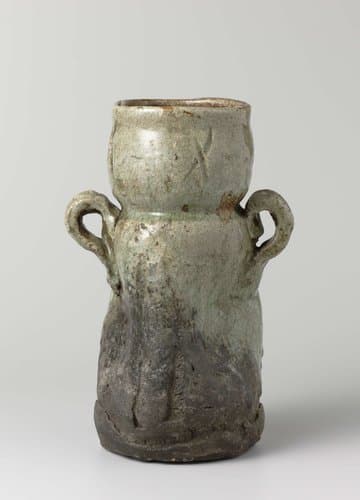
Vase with a green glaze and two handles
ca. 1600 - ca. 1699
Medium
turning
Dimensions
10.5; 17.5; 11.8; 26.7; 14.1
Rights
Public Domain
About this artwork
Vaas van steengoed met twee oren op de schouder, gedeeltelijk bedekt met een celadongroen glazuur. De buik is ingedeukt en op de nek viermaal een ingegrift kruis. Het onderste deel van de vaas is ongeglazuurd. Oud handelaarslabel op de onderzijde met 'N.V. Hammer - Far Eastern Art New York/ 440'. Iga.
Art Historical Context
This elegant stoneware vase, dating to the 17th century (ca 1600–1699), hails from Japan's Iga region, renowned for its robust, high-fired ceramics. Standing 26.7 cm tall and 10.5 cm in diameter, it features two handles on the shoulder, an intriguingly indented belly, and four incised crosses on the neck—subtle motifs that add rhythmic texture. Crafted using the wheel-throwing technique (known as "turning"), its showcases the potter's skill in shaping durable, everyday stoneware into a refined vessel. Partially coated in a prized celadon green glaze, which evokes the serene jade tones of East Asian tradition, the vase's upper body shimmers with subtle crackle effects, while the unglazed foot reveals the raw, earthy clay beneath. Iga ware, emerging during Japan's Momoyama and early Edo periods, was fired in wood-burning kilns, where ash naturally fused into glaze-like finishes, blending utility with artistry. Though anonymous, this piece reflects Iga's cultural legacy: pottery born from local clays and kilns that supplied tea ceremony wares and exports. A faded dealer's label from N.V. Hammer's Far Eastern Art in New York hints at its journey through global collections, bridging 17th-century Japan with modern appreciation.