
Vase with dragons
Unknown Artist
late 16th century
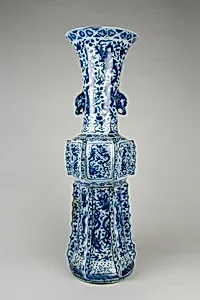
Medium
Porcelain painted in underglaze cobalt blue (Jingdezhen ware)
Dimensions
H. 35 1/4 in. (89.5 cm); Diam. 11 in. (27.9 cm); Diam. of rim 10 5/8 in. (27 cm); Diam. of base 10 1/4 in. (26 cm)
Classification
Ceramics
Culture & Period
China · Ming dynasty (1368–1644), Wanli period (1573–1620)
Department
Asian Art
Museum
Metropolitan Museum of Art, New York, NY
Credit
Rogers Fund
Accession Number
17.177
Rights
Public Domain
Art Historical Context
This elegant vase, adorned with majestic dragons, exemplifies the pinnacle of Ming dynasty porcelain artistry from China's renowned Jingdezhen kilns. Standing an impressive 35¼ inches tall, it dates to the late 16 century during the Wanli period (1573–1620), a golden era of imperial patronage when emperors commissioned lavish ceramics for palaces and as diplomatic gifts. Produced in underglaze cobalt blue—a perfected in Jingdezhen—the cobalt pigment applied to the unfired porcelain body before a transparent glaze is added and the piece is fired at high temperatures. This method yields the vivid, enduring blue hues that became synonymous with Chinese export porcelain, prized by collectors worldwide. Dragons, powerful symbols of imperial authority, good fortune, and the emperor's divine mandate, coil dynamically around the vase's swelling form, their sinuous bodies and fierce expressions capturing the era's exuberant decorative style. Such monumental vases were status symbols, often displayed in grand halls to invoke prosperity and protection. Acquired through the Rogers Fund for the Metropolitan Museum of Art's Asian Art collection, this Jingdezhen masterpiece highlights the Ming dynasty's technical innovation and cultural prestige, bridging artistry with imperial symbolism for visitors to admire today.