
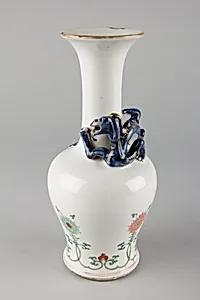
Vase with entwined dragon
Unknown Artist
late 17th–early 18th century
Medium
Porcelain painted in overglaze polychrome enamels, and relief decoration with dark blue glaze and gilt (Jingdezhen ware)
Dimensions
H. 9 in. (22.9 cm)
Classification
Ceramics
Culture & Period
China · Qing dynasty (1644–1911), Kangxi period (1662–1722)
Department
Asian Art
Museum
Metropolitan Museum of Art, New York, NY
Credit
Purchase by subscription, 1879
Accession Number
79.2.1223
Rights
Public Domain
Tags
Art Historical Context
This elegant porcelain vase, titled *Vase with Entwined*, hails from China's Jingdezhen kilns during the Kangxi period (1662–1722) of the Qing dynasty1644–1911). Standing at just 9 inches tall, it exemplifies the era's pinnacle of ceramic artistry, when imperial workshops produced wares of unparalleled refinement for palaces and elite collectors. The late 17th– to early 18th-century places it amid a golden age of porcelain innovation, fueled by Emperor Kangxi's patronage and technological advances. Crafted with overglaze polychrome enamels—vibrant colors applied and fired after glazing for jewel-like hues—the vase features relief decoration in dark blue glaze and gilt. An entwined dragon, a potent symbol of imperial power and good fortune, coils dynamically around the body, intertwined with floral motifs evoking prosperity and harmony. Jingdezhen porcelain, often called "white gold," was prized globally, influencing European ceramics and trade via the Silk Road and maritime routes. Acquired by subscription in 1879, this piece now graces the Metropolitan Museum of Art's Asian Art department, offering a window into Qing opulence and the enduring cultural reverence for dragons as cosmic guardians. A true treasure for any visitor!