
Vasi, candelabri, cippi, sarcofagi, tripodi, lucerne, ed ornamenti antichi disegn. ed incisi dal cav. Gio. Batta Piranesi
Medium
etching
Dimensions
520; 387
Rights
Public Domain
About this artwork
collector's mark: Lugt 2228
Art Historical Context
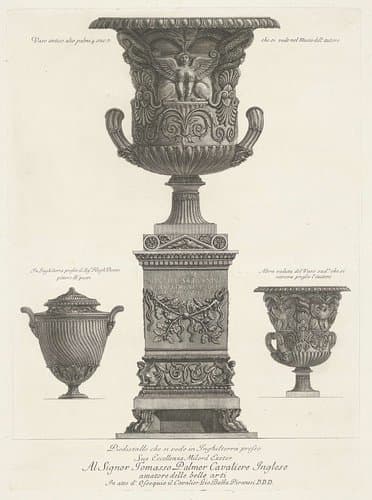
Step into the intricate world of Giovanni Battista Piranesi's *Vasi, candelabri, cippi, sarcofagi, tripodi,erne, ed ornamenti* (1778), a masterful etching measuring 520 × 387 mm. This-born artist (1720–1778), often called the "Rembrandt of architecture," was a fervent champion of ancient Rome. Working in the Neoclassical era, Piranesi produced vast series of prints documenting Roman ruins and artifacts, blending meticulous observation with dramatic imagination to evoke the grandeur of antiquity. This plate, from Piranesi's final major publication, showcases vases, candelabra, funerary markers (cippi), sarcophagi, tripods, oil lamps, and other ornate objects unearthed from Roman sites. Created amid the Enlightenment's passion for classical revival, it served as both scholarly catalog and artistic inspiration for architects and designers across Europe, influencing neoclassical taste in furniture and decoration. Piranesi's etchings captured the weathered textures and symbolic details of these relics, bridging archaeology and art. Rendered in etching—a technique Piranesi perfected for its precision and tonal depth—the print reveals his virtuoso linework, from fine hatching to bold contrasts. Bearing the collector's mark Lugt 2228, it hints at a distinguished provenance, underscoring its enduring appeal to connoisseurs. A testament to Rome's eternal allure, this work invites you to ponder the lives behind these ancient treasures.
About the Artist
Giovanni Battista Piranesi · 1720–1778
Giovanni Battista Piranesi (1720–1778) was an Italian printmaker, architect, and antiquarian whose visionary etchings of Rome and imaginary prisons revolutionized architectural representation and profoundly influenced both Neoclassicism and Romanticism. Piranesi stands as one of the most important printmakers of the eighteenth century, fundamentally shaping European perceptions of ancient Rome an...