
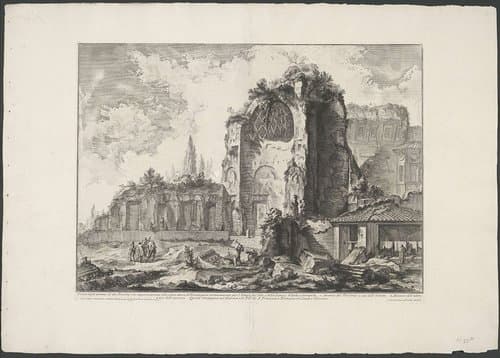
Vedute di Roma disegnate ed incise da Giambattista Piranesi architetto Ve(nez)iano
1748 - 1778
Medium
etching
Dimensions
413; 559
Rights
Public Domain
About this artwork
Deze prent maakt deel uit van de serie 'Vedute di Roma'. Piranesi werkte aan deze 135 platen tellende serie tussen 1748 en zijn dood in 1778. Francesco Piranesi voegde later nog twee prenten toe aan de reeks van zijn vader.
Art Historical Context
Step into the eternal city through the masterful etchings of Giovanni Battista Pir, the Venetian architect-turned-artist whose *Vedute di Roma* captures Rome's grandeur like no other. This particular print, from the expansive collection of 135 plates created between 1748 and Piranesi's death in 1778, exemplifies his lifelong passion for the city's ancient ruins and baroque splendor. Measuring 413mm by 559mm, it invites viewers on a virtual Grand Tour—an 18th-century rite for Europe's elite who sought inspiration from classical antiquity. Piranesi's etchings revolutionized the vedute genre, blending precise architectural detail with dramatic lighting and exaggerated scale to evoke awe and melancholy. As both artist and etcher, he personally designed and incised each plate, infusing them with his visionary style that bridged neoclassicism and emerging Romanticism. These works weren't mere postcards; they preserved Rome's decaying monuments amid a growing fascination with the past, making the inaccessible tangible for collectors worldwide. A touching legacy endures: Piranesi's son Francesco added two final prints, extending his father's monumental series. Today, this etching stands as a testament to one man's obsession with Rome, reminding us how art can immortalize time's relentless march.
About the Artist
Giovanni Battista Piranesi · 1720–1778
Giovanni Battista Piranesi (1720–1778) was an Italian printmaker, architect, and antiquarian whose visionary etchings of Rome and imaginary prisons revolutionized architectural representation and profoundly influenced both Neoclassicism and Romanticism. Piranesi stands as one of the most important printmakers of the eighteenth century, fundamentally shaping European perceptions of ancient Rome an...