
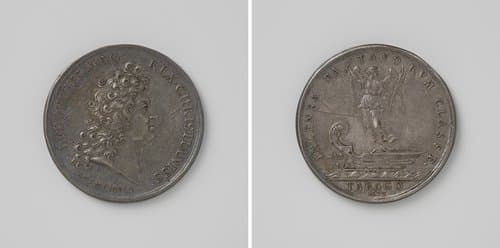
Verbranden van de Nederlandse vloot bij Tobago
1677 - 1700
Medium
striking (metalworking)
Dimensions
3.8; 28.95
Rights
Public Domain
About this artwork
diameter 3.8 cm x weight 28.95 gr
Art Historical Context
Behold the intricate medal *Verbranden van Nederlandse vloot bij Tobago*Burning of the Dutch Fleet Tobago), crafted by Dutch medalist Anton Meybusch 1677 and 1700. This petite struck bronze piece, measuring just 3.8 cm in diameter and weighing .95 grams, commemorates a dramatic episode from the Franco-Dutch War. In January 1677, French under Admiral Abraham Duquesne decisively defeated and torched the Dutch squadron anchored off Tobago in the Caribbean, marking a pivotal naval humiliation amid colonial rivalries for sugar-rich islands. Meybusch, a skilled practitioner of 17th-century medal art, employed the striking technique—hammering a die into softened metal—to capture the chaos of billowing flames and sinking ships with remarkable detail on such a tiny scale. This method, popular in the Baroque era, allowed for high-relief designs that celebrated (or mourned) historical events, blending propaganda with artistry. Medals like this were prized collectibles, portable emblems of power and loss, often distributed among elites to preserve memory. Though modest in size, its craftsmanship invites close scrutiny, revealing the era's masterful micro-engraving and the enduring cultural fascination with naval glory and tragedy in Europe's age of sail. A poignant survivor of history's tempests!
About the Artist
Anton Meybusch · 1635–1702
Anton Meybusch (1645–1702) was a German medallist who achieved international prominence through his work for the royal courts of Denmark, Sweden, and France. Born in 1645, Meybusch specialized in medal and coin production, a demanding art form requiring exceptional skill in die-cutting, design, and metalwork. His career exemplified the international mobility of skilled craftsmen in 17th-century Eu...