
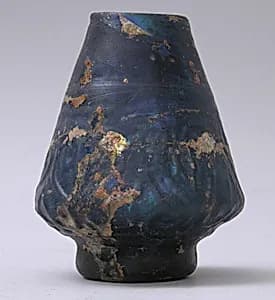
Vial
Unknown Artist
10th–11th century
Medium
Glass; mold blown, tooled on the pontil
Dimensions
H. 3 1/2 in. (8.9 cm) Max. diam. (7 cm)
Classification
Glass
Department
Islamic Art
Museum
Metropolitan Museum of Art, New York, NY
Credit
Bequest of Walter C. Baker, 1971
Accession Number
1972.118.179
Rights
Public Domain
Art Historical Context
This delicate glass vial, dating to the 10th–11th century, hails from the vibrant world of Islamic art, where artisans crafted exquisite objects for everyday luxury. Standing just 3½ inches tall with a maximum diameter of cm, it exemplifies the refined scale of portable treasures like perfume or oil containers, cherished in medieval Islamic societies across the Middle East and beyond. Its presence in the Metropolitan Museum of Art's Islamic department, thanks to the bequest of Walter C. in 1971, its enduring appeal as a window into a golden age of craftsmanship. The vial's creation showcases sophisticated glassmaking techniques: mold-blown to imprint intricate patterns or textures directly from the mold, then tooled on the pontil—a skilled finishing touch using an iron rod to shape the base and remove imperfections. These methods, perfected by Islamic glassworkers, allowed for mass production of beautifully decorated vessels that were both functional and ornamental, often rivaling metalwork in prestige. Such innovations spread along trade routes, influencing global glass traditions. Though the artist remains unknown, this vial captures the cultural elegance of its era, where glass symbolized refinement and piety—vessels like these might have held scented oils for personal or ritual use. A testament to anonymous mastery, it invites us to marvel at the hands that shaped such fragile beauty over a millennium ago.