
Virtu is niet meer dan een woord
1520 - 1560
Medium
paper
Dimensions
340; 218
Rights
Public Domain
About this artwork
height 340 mm x width 218 mm
Art Historical Context
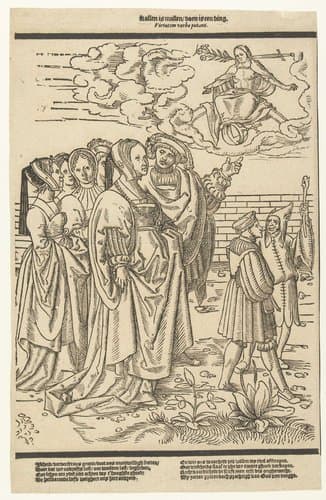
### Virtu is niet meer dan woord (Virtue is Nothing More a Word) This intriguing anonymous work, titled *Virtu is niet meer een woord*—translating to "Virtue is nothing more than a word"— to the mid-16th century (1520–1560) and hails from the Low Countries, where Dutch was spoken. Crafted on paper measuring 340 mm high by 218 mm wide, it exemplifies the modest yet potent scale of Renaissance-era drawings or prints. During this vibrant period of Northern Renaissance humanism, artists often philosophical and moral themes through proverbs, reflecting the era's blend of religious fervor, emerging skepticism, and everyday wisdom. The cynical tone of the title hints at a commentary on the gap between professed virtue and human behavior, a motif echoing in the satirical works of contemporaries like Hieronymus Bosch or Pieter Bruegel the Elder. As an anonymous piece on paper, it likely served as a personal sketch, broadsheet, or study, techniques that allowed wide dissemination of ideas without the prestige of named masters. Paper's affordability made it ideal for such ephemeral yet culturally resonant expressions. Though details are sparse, this artwork captures the intellectual curiosity of 16th-century Europe, inviting visitors to ponder timeless questions about morality amid artistic innovation. A subtle reminder that even simple words on paper can provoke profound reflection.
About the Artist
anonymous
In the vast tapestry of art history, "Anonymous" stands not as a singular individual but as a collective designation for countless unidentified creators whose works have endured across millennia. These artists, spanning prehistoric cave painters to medieval illuminators and folk craftsmen, produced the foundational layers of human visual culture. Prior to the Renaissance, when individual fame emer...