
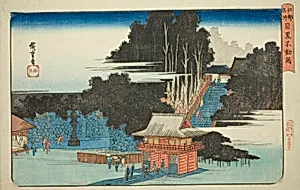
Visiting the Fudo Temple in Meguro (Meguro Fudo mode), from the series "Famous Places in Edo (Koto meisho)"
c. 1832/34
Medium
Color woodblock print; oban
Dimensions
25 × 38.5 cm (9 13/16 × 15 1/8 in.)
Classification
woodblock print
Department
Arts of Asia
Museum
Art Institute of Chicago
Accession Number
25460
Rights
Public Domain
Art Historical Context
Utagawa Hiroshige’s “Visiting the Fudo Temple in Meguro” captures a serene moment of pilgrimage at one of Edo’s beloved temples. Created around 1832–34 as part of the series *Famous Places in Edo*, the print invites viewers to join townspeople on a peaceful outing, blending everyday life with the quiet beauty of nature. Hiroshige, a leading figure in the ukiyo-e tradition, specialized in such landscape views that celebrated Japan’s changing seasons and scenic spots. During the late Edo period, color woodblock prints like this oban-sized sheet became widely popular souvenirs and affordable art for the growing urban middle class. They helped spark interest in travel and local sightseeing, turning temples such as Meguro Fudo into destinations not only for worship but also for leisure. Hiroshige’s subtle use of perspective and atmospheric color helped define the genre’s lyrical approach to place. Printed through the collaborative efforts of artist, carver, and printer, the work demonstrates the refined technique of ukiyo-e. Its gentle palette and balanced composition continue to offer modern viewers a vivid glimpse into nineteenth-century Japanese culture and the enduring appeal of Edo’s celebrated landscapes.
About the Artist
Utagawa Hiroshige · 1826–1869
Utagawa Hiroshige (1797–1858), born Andō Tokutarō, was the last great master of Japanese ukiyo-e woodblock printmaking and one of the most influential landscape artists in history. Born in Edo (modern Tokyo) into a low-ranking samurai family serving as fire wardens, Hiroshige transformed landscape printmaking into a poetic meditation on nature, weather, and everyday life. His revolutionary approac...