
蕙斎麁画; 讃科画圖蕙齋麁画(さんか がず けいさい そうが)|Vol. 1 of 5, Various Pictures by Keisai (Keisai soga) 蕙斎麁画; 讃科画圖蕙齋麁画(さんか がず けいさい そうが)
ca. 1815–42
Medium
Woodblock printed book; ink and color on paper
Dimensions
9 × 6 5/16 in. (22.9 × 16 cm)
Classification
Illustrated Books
Culture & Period
Japan · Edo period (1615–1868)
Department
Asian Art
Museum
Metropolitan Museum of Art, New York, NY
Credit
Purchase, Mary and James G. Wallach Foundation Gift, 2013
Accession Number
2013.880
Rights
Public Domain
Tags
Art Historical Context
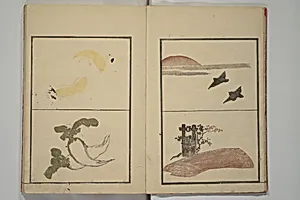
Step into the vibrant world of Edo-period Japan with *Keisai Soga* (蕙斎麁画), Volume 1 of a five-part woodblock-printed book by Kuwagata Keisai created around 1815–1842. This charming illustrated book, measuring a compact 9 × 6 5/16 inches, Keisai's playful " sketches" (*soga*) in ink and color on paper—a technique that made intricate designs accessible through Japan's masterful woodblock printing process. During the Edo period (1615–1868), such books flourished, blending artistry with everyday curiosity. Keisai, a prolific ukiyo-e artist known for his lively depictions of nature and objects, fills these pages with delightful subjects: musical instruments, birds, vegetables, and butterflies. The vivid colors and dynamic compositions highlight the beauty in the ordinary, from fluttering wings to textured produce, showcasing the precision of woodblock carving that allowed subtle gradients (*bokashi*) and bold hues to come alive on paper. Housed in the Metropolitan Museum of Art's Asian Art collection, this volume reflects Edo Japan's cultural fascination with *shasei* (nature sketching) and *surimono*-style prints. It's a window into an era when art democratized joy, inviting viewers to appreciate life's simple wonders—perfect for pondering over a cup of tea!
About the Artist
Kuwagata Keisai 鍬形蕙斎 (Japanese) · 1764 –1824
Japanese, 1764–1824