
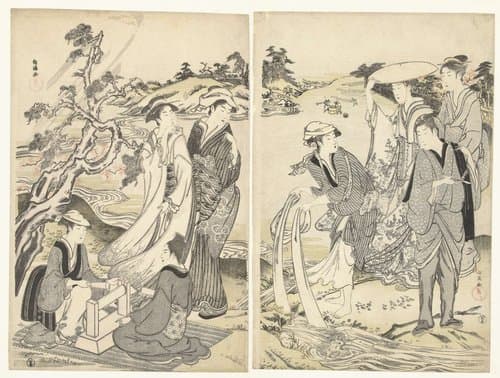
Vollende vrouwen langs de zes Tama rivieren
1785 - 1790
Medium
color woodcut
Dimensions
378; 382; 252; 253
Rights
Public Domain
About this artwork
kleurenhoutsnede; lijnblok in zwart met kleurblokken; blinddruk
Art Historical Context
**Vollende Vrouwen Langs de Zes Tama Rivieren** by Kubota Shunman (. 1785–1790) is a captivating color woodcut from Japan's late Edo period, a time when ukiyo-e prints flourished as affordable yet exquisite art for the urban populace. Measuring 382 × 253 mm, this intimate sheet exemplifies Shunman's mastery as a versatile artist and poet, blending delicate imagery with poetic elegance. The title evokes graceful women strolling along the six branches of the Tama River, a picturesque waterway west of Edo (modern Tokyo), capturing the era's fascination with bijin-ga—depictions of elegant beauties in everyday leisure. Crafted via traditional woodblock techniques, the print features a black key block for precise outlines, overlaid with vibrant color blocks, and enhanced by *blinddruk* (embossing), which adds subtle texture to fabrics and landscapes without ink. This labor-intensive process, requiring multiple carved blocks, highlights the technical sophistication of ukiyo-e, making Shunman's work prized among collectors. Such prints often served as New Year's greetings (*surimono*), combining art, poetry, and craftsmanship. In cultural context, this piece reflects the "floating world" ethos of ukiyo-e, celebrating transient beauty amid nature. Shunman's innovative touch elevates it beyond mere illustration, offering visitors a window into 18th-century Japan's refined aesthetic sensibilities. (198 words)