
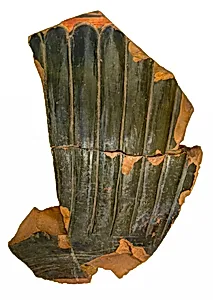
Volute-krater fragment
Unknown Artist
4th century BCE
Medium
Terracotta
Dimensions
2 7/8 x 2 1/2in. (7.3 x 6.4cm)
Classification
Vases
Culture & Period
Greek, South Italian, Apulian · Late Classical
Department
Greek and Roman Art
Museum
Metropolitan Museum of Art, New York, NY
Credit
Rogers Fund, 1919
Accession Number
19.192.81.83
Rights
Public Domain
Art Historical Context
This delicate terracotta fragment from a volute-krater dating to the 4 century BCE, offers a glimpse into the vibrant world of South Italian Apulian pottery during the Late Classical period. in the Greek colonies of Apulia (modern-day Puglia, Italy), volute-kraters were grand mixing vessels for wine and water, essential to symposia—lively social gatherings where elites reclined, conversed, and reveled. The distinctive volute (scroll-like) handles, though partially preserved here in this modest 2 7/8 x 2 1/2-inch piece, elevated these vases as both functional objects and status symbols. Apulian artisans excelled in red-figure techniques, firing terracotta to create a glossy red surface where figures were painted in black slip, leaving reserved areas to reveal the clay's natural hue. This fragment exemplifies their flair for ornate decoration, often featuring mythological scenes, warriors, or theatrical motifs inspired by Greek drama. Though incomplete, it reflects the cultural fusion of Greek colonists with local Italic traditions, producing some of the most elaborate vases of antiquity. Acquired through the Rogers Fund in 1919, this piece at the Metropolitan Museum of Art preserves the ingenuity of anonymous craftsmen whose work bridged everyday ritual and artistic innovation, inviting us to imagine the feasts it once graced.