
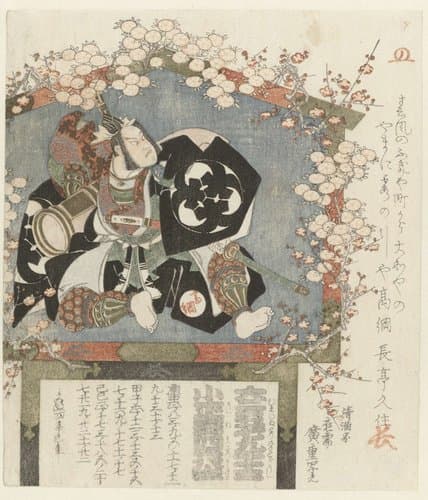
Votief met een portret van Bandô Mitsugorô III
Medium
nishikie, with metallic pigments
Dimensions
212; 184
Rights
Public Domain
About this artwork
collector's mark, verso, stamped: Lugt 2228
Art Historical Context
Step into the vibrant world of Edo-period Japan *Votief met een portret van Band Mitsugorô III* (1821), an exquisite ukiyo-e woodblock by Utagawa Hiroige I. This intimate portrait honors the celebrated kabuki actor Bandô Mitsorô III (1775–1839), a of dramatic roles whose fame made him a cultural icon.ed as a votive offering—likely intended for a shrine or personal devotion—the print captures the actor's poised elegance, reflecting the "floating world" (ukiyo) fascination with theater stars in early 19th-century Tokyo. Crafted in the luxurious *nishikie* (brocade print) style, it showcases Hiroshige's early mastery of multi-color woodblock printing, enhanced by shimmering metallic pigments that evoke kabuki's theatrical glamour. At just 212 × 184 mm, its compact size suggests it was designed for private admiration or ritual use, a testament to ukiyo-e's role in democratizing art for everyday enthusiasts. This rare early work from Hiroshige—best known later for lyrical landscapes—highlights his roots in actor portraits (*yakusha-e*), which fueled a booming print market. Bearing collector's mark Lugt 2228 (Frits Lugt's collection) on the verso, it bridges Japanese artistry with European connoisseurship, inviting us to ponder theater's timeless allure.