
Vrede van Fontainebleau tussen Denemarken en Zweden, ter ere van Karel XI
1679
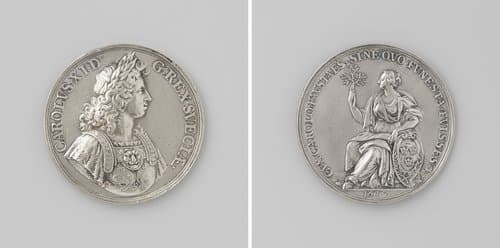
Medium
striking (metalworking)
Dimensions
407; 4.7
Rights
Public Domain
About this artwork
Gift of J.M. van Gelder-Nijhoff
Art Historical Context
This striking medal, created in 1679 by Swedish medallist Arvid Karlsteen, commemorates the Peace of Fontainebleau between Denmark and Sweden. Measuring just 4.7 centimeters in diameter and weighing 407 grams, the work was produced through the traditional technique of striking metal, a precise method that allowed for intricate relief designs celebrating diplomatic triumphs. Karlsteen, known for his elegant portraits and allegorical scenes, crafted such pieces to honor King Charles XI and mark the end of hostilities that had plagued the Baltic region. The treaty itself represented a significant moment in Northern European history, restoring stability after years of conflict and reinforcing Sweden’s position as a major power. Medals like this one served not only as artistic objects but also as portable records of political events, often distributed to diplomats, courtiers, and collectors to spread news of the peace. Donated to the collection by J.M. van Gelder-Nijhoff, this rare artifact offers visitors a tangible connection to 17th-century diplomacy and the refined art of medal-making.
About the Artist
Arvid Karlsteen · 1647–1718
Arvid Karlsteen (1647–1718) was a Swedish medal engraver and portrait miniaturist who documented Swedish royalty during the reign of King Charles XI. Born on March 16, 1647, on a farm near Karlskoga, Karlsteen was the son of Jonas Kjellander, a cartographer, and his wife Brita Larsdotter von Sacken. This family background provided exposure to precision draftsmanship and careful documentation, skil...