
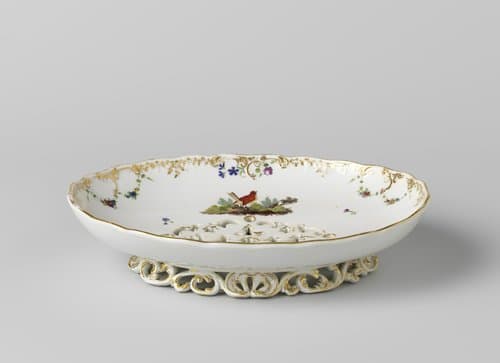
Vruchtenschaal, beschilderd met bladranken en bloemguirlandes
ca. 1784
Medium
painting technique
Dimensions
5; 23; 17.5
Rights
Public Domain
About this artwork
height 5 cm x width 23 cm x depth 17.5 cm
Art Historical Context
This elegant fruit bowl, created around 1784 by the Manufacture Oud-Loosdrecht, exemplifies the refined porcelain production of late eighteenth-century Netherlands. The factory, active from 1774 to 1784 in the town of Loosdrecht, specialized in high-quality tableware that blended European decorative traditions with the technical mastery of hard-paste porcelain. Its modest dimensions—just five centimeters high and roughly twenty-three centimeters wide—suggest it was intended as a refined serving piece for intimate gatherings rather than grand displays. The bowl’s painted decoration of leafy tendrils and flower garlands reflects the period’s enduring taste for naturalistic motifs, drawn from both Dutch still-life traditions and the lighter, more playful aesthetics of late Rococo design. Such ornamentation required skilled hand-painting, often applied over a white glaze to create delicate, scrolling patterns that evoke abundance and seasonal beauty. As a product of one of the Netherlands’ short-lived yet influential porcelain manufactories, this piece offers visitors a glimpse into the era’s growing appreciation for locally made luxury goods, bridging courtly elegance with the emerging domestic refinement of the Enlightenment age.