
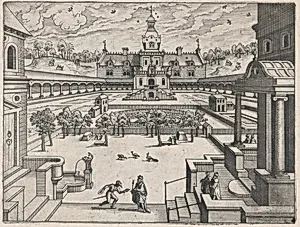
Walled Garden
ca. 1560–70
Medium
Etching and engraving
Dimensions
sheet: 7 5/16 x 10 1/16 in. (18.6 x 25.5 cm) plate: 5 7/8 x 7 3/4 in. (15 x 19.7 cm)
Classification
Prints
Department
Drawings and Prints
Museum
Metropolitan Museum of Art, New York, NY
Credit
Purchase, Barbara and Howard Fox Gift, Chester Dale Bequest, by exchange; A. Hyatt Mayor Purchase Fund, Marjorie Phelps Starr Bequest, 1999
Accession Number
1999.360.10
Rights
Public Domain
Tags
About this artwork
[Research in progress for Walled Garden by Lucas Gassel, ca. 1560–70]
Art Historical Context
Lucas Gassel’s *Walled Garden*, created around 1560–70, captures the ordered beauty of a Renaissance pleasure garden. As a Flemish artist active during the Northern Renaissance, Gassel was known for detailed landscapes that often incorporated figures within carefully structured settings. Here, the walled enclosure frames men engaged in leisurely activity, reflecting the period’s growing interest in formal gardens as spaces of contemplation, status, and harmony with nature. Executed in etching and engraving, the print combines the fluid lines of etching with the precise, controlled marks of engraving. This technique allowed artists to produce finely detailed images that could be widely distributed, making sophisticated garden designs and scenes accessible beyond palace walls. The modest size of the sheet further suggests it was intended for private collectors or as part of a print series. Acquired by the Metropolitan Museum of Art in 1999, this work offers a glimpse into sixteenth-century ideals of cultivated space and the enduring appeal of garden imagery in European art.