
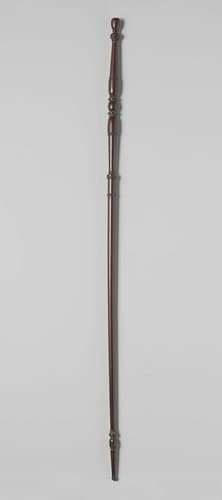
Wandelstok van palissanderhout, met geledingen en met sporen van polychromie
ca. 1685 - ca. 1700
Medium
cutting
Dimensions
2.7; 120
Rights
Public Domain
About this artwork
Gift of A.J. Moes-Veth
Art Historical Context
Step into the refined world of late 17th-century European craftsmanship with this elegant walking stick, crafted anonymously around 1685–1700 from luxurious rosewood (palisshout). Measuring approximately 120 cm in length and 2.7 cm in diameter, its slender form features distinctive segmented sections (geledingen), likely achieved through precise woodturning or cutting techniques—a hallmark of period decorative arts. Faint traces of polychromy at once-vibrant painted embellishments, adding a layer of opulence now softened by time. Rosewood, an exotic import from Asia or the Americas, was prized for its rich, dark grain and durability, symbolizing status among the elite. During the Dutch Golden Age's waning years, such accessories transcended mere utility; they were fashion statements for gentlemen, evoking the Baroque era's love for intricate, tactile luxury. The segmentation suggests skilled lathe work, blending functionality with subtle artistry. Generously donated by A.J. Moes-Veth, this artifact offers a glimpse into everyday elegance of the period, reminding us how personal objects carried profound cultural weight. A testament to anonymous makers' mastery, it invites reflection on the unsung hands behind history's grandeur.
About the Artist
anonymous
In the vast tapestry of art history, "Anonymous" stands not as a singular individual but as a collective designation for countless unidentified creators whose works have endured across millennia. These artists, spanning prehistoric cave painters to medieval illuminators and folk craftsmen, produced the foundational layers of human visual culture. Prior to the Renaissance, when individual fame emer...