
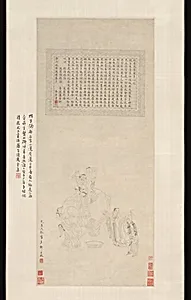
清 陳字 洗象圖 軸|Washing the White Elephant
undated
Medium
Hanging scroll; ink on paper
Dimensions
Image: 34 5/16 x 15 1/16 in. (87.2 x 38.3 cm) Overall with mounting: 86 3/4 x 23 in. (220.3 x 58.4 cm) Overall with knobs: 86 3/4 x 27 1/4 in. (220.3 x 69.2 cm)
Classification
Paintings
Culture & Period
China · Qing dynasty (1644–1911)
Department
Asian Art
Museum
Metropolitan Museum of Art, New York, NY
Credit
Purchase, The Dillon Fund Gift, 1976
Accession Number
1976.191
Rights
Public Domain
Tags
Art Historical Context
Chen Zi’s “Washing the White Elephant,” a Qing-dynasty hanging scroll in ink on paper, captures a quiet moment of human-elephant interaction. Created during the long reign of the Manchu emperors (1644–1911), the work belongs to a venerable Chinese tradition in which animals often carried symbolic weight—elephants, especially white ones, suggesting purity, rarity, and imperial favor. The tall, narrow format of the scroll encourages viewers to appreciate the scene gradually as the eye travels from the splashing water at the bottom to the figures above. Rendered with fluid brushstrokes typical of ink painting, the composition balances the massive, pale form of the elephant against the smaller, active shapes of the attendants. The medium itself—ink on paper—allows for delicate tonal gradations and expressive lines that convey both the animal’s bulk and the gentle motion of washing. Acquired by the Metropolitan Museum in 1976, the scroll offers today’s visitors a glimpse into centuries-old Chinese artistic practices that valued suggestion and harmony over literal detail.