
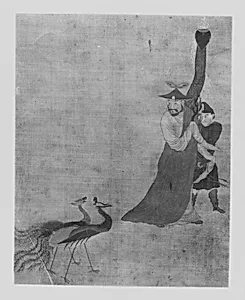
Watching the Phoenix
Medium
Hanging scroll; ink and color on silk
Dimensions
Overall: 19 1/8 x 15 1/4 in. (48.6 x 38.7 cm)
Classification
Paintings
Culture & Period
China · Ming dynasty (1368–1644) or later
Department
Asian Art
Museum
Metropolitan Museum of Art, New York, NY
Credit
John Stewart Kennedy Fund, 1913
Accession Number
13.100.31
Rights
Public Domain
Tags
Art Historical Context
**Watching the Phoenix** This enchanting hanging scroll, titled * the Phoenix*, hails from China during the Ming dynasty (8–1644) or later, created by an unidentified artist using ink and color on silk Measuring a compact 19 1/8 x 15 1/4 inches, it exemplifies the intimate scale of traditional Chinese scroll paintings, designed to be unrolled slowly for personal contemplation. The composition likely captures men in quiet observation of the mythical phoenix, a recurring motif in Chinese art symbolizing renewal, virtue, and imperial grace—often paired with dragons to represent harmony between yin and yang. Hanging scrolls like this were prized in scholarly and elite circles, serving as portable treasures for meditation or display during gatherings. The use of ink and color on silk highlights masterful techniques in layering delicate washes and precise lines, blending literati subtlety with vivid symbolism. The phoenix, a fenghuang in Chinese lore, embodies prosperity and the empress's benevolence, reflecting Ming-era fascination with auspicious omens amid dynastic stability and cultural flourishing. Acquired through the John Stewart Kennedy Fund in 1913, this work graces the Metropolitan Museum of Art's Asian Art collection, offering visitors a window into China's poetic worldview where nature and myth intertwine. Pause here to imagine the awe of ancient viewers unrolling its secrets.