
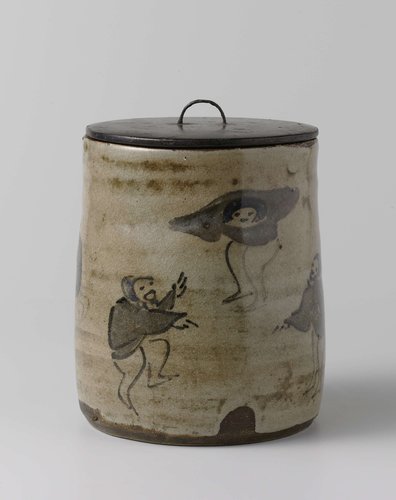
Waterpot met vijf dansende personen en opschriften
c. 1800 - c. 1899
Medium
turning
Dimensions
16.7; 11.8; 12.1; 13.1; 14.9; 12.2; 1.7
Rights
Public Domain
About this artwork
label: ‘W756’
Art Historical Context
This delightful waterpot, titled *Waterpot met vijf dans personen en opschriften (Waterpot with Five Dancing Persons and Inscriptions stands at a modest height of 167 cm and dates to the 19th century (c. 1800–1899). Crafted by an anonymous artisan using the turning technique—likely wheel-throwing on a potter's lathe—it exemplifies everyday ceramics elevated by playful decoration. The surface features five lively dancing figures alongside inscriptions, suggesting a scene of festivity or communal joy, transformed from a functional vessel into a charming artifact. In the context of 19th-century folk pottery traditions, possibly from Dutch or Northern European workshops, such pieces blended utility with artistic expression. Waterpots like this were essential for household water storage, yet the addition of dynamic human forms and text hints at personal or celebratory significance—perhaps marking a wedding, festival, or artisan's whimsy. The anonymity underscores the collaborative, craft-based nature of the era's ceramics, where skilled potters prioritized form and narrative over individual fame. The turning method ensured the pot's graceful, symmetrical shape, allowing for precise incising or painting of motifs. Labeled ‘W756,’ this survivor offers a window into vernacular art, reminding us how ordinary objects captured the rhythm of daily life and human connection.