
Whistle
Unknown Artist
7th–2nd century BCE
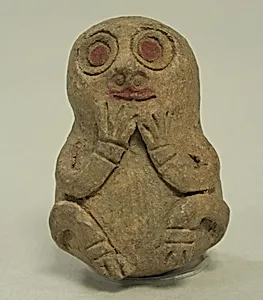
Medium
Ceramic
Dimensions
H. 1 15/16 x W. 1 3/8 x 1 1/4 in. (5 x 3.5 x 3.2 cm)
Classification
Ceramics-Musical Instruments
Culture
Paracas
Department
Arts of Africa, Oceania, and the Americas
Museum
Metropolitan Museum of Art, New York, NY
Credit
The Michael C. Rockefeller Memorial Collection, Bequest of Nelson A. Rockefeller, 1979
Accession Number
1979.206.1068
Rights
Public Domain
Tags
Art Historical Context
This petite ceramic whistle, crafted by an unknown Paracas artist between the 7th and 2nd centuries BCE, offers a glimpse into the vibrant of Peru's ancient Paracas culture on the southern coast. Measuring just under 2 inches tall, this functional musical instrument exemplifies the Paracas people's mastery of ceramics, a medium they used to create both utilitarian objects and items. The Paracas, predecessors to the Inca, were renowned for their intricate textiles and mummification practices, but their pottery often served practical and ceremonial roles, blending everyday utility with symbolic expression. As a whistling vessel, this artifact highlights the cultural importance of sound in Paracas society, where music likely accompanied rituals, feasts, or storytelling. Ceramic whistles like this one were typically molded from clay, fired to a durable finish, and sometimes decorated with motifs of animals or humans—though specifics here remain enigmatic due to the object's modest size and preservation. Its classification as a musical instrument underscores how Paracas artisans integrated form and function, producing objects that could emit eerie, bird-like tones when blown. Now part of The Metropolitan Museum of Art's Michael C. Rockefeller Memorial Collection, this whistle invites visitors to ponder the auditory landscapes of ancient Peru, connecting us to a time when clay not only held liquids but also voices from the past.