
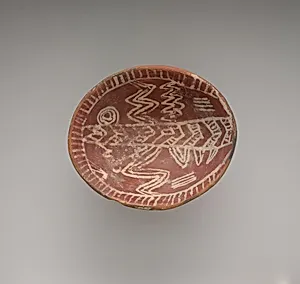
White cross-lined bowl with four legs
Unknown Artist
ca. 3700–3500 B.C.
Medium
Pottery, paint
Dimensions
H: 15.6 cm (6 1/8 in.); diam: 19.7 cm (7 3/4 in.)
Classification
Bowl, white cross-lined ware, four legs
Period
Predynastic, Late Naqada I–Early Naqada II
Department
Egyptian Art
Museum
Metropolitan Museum of Art, New York, NY
Credit
Rogers Fund, 1910
Accession Number
10.176.107
Rights
Public Domain
Art Historical Context
This elegant white cross-lined bowl with four legs hails from Predynastic Egypt, dating around 3700–3500 B.C. during the Late Naqada to Early Naqada II. Crafted from pottery and adorned with paint, it stands just 15.6 cm high and 19.7 cm in diameter, making it a compact yet striking vessel. Acquired through the Rogers Fund in 0, it now graces the Egyptian Art collection at the Metropolitan Museum of Art, offering a glimpse into the sophisticated craftsmanship of ancient Nile Valley communities long before the pyramids rose. The bowl's distinctive design—its white surface painted with bold cross lines and elevated on four sturdy legs—exemplifies the vibrant painted pottery tradition of the Naqada culture. These motifs, often geometric and rhythmic, reflect emerging artistic experimentation as Egyptian society transitioned toward unification under early kings. The legged base suggests functionality for stability or ritual elevation, possibly used in daily life, feasting, or funerary rites, highlighting the integral role of ceramics in Predynastic expression. Such vessels reveal a culture on the cusp of greatness: skilled potters fired durable earthenware, then applied rippled or cross-hatched patterns that symbolized continuity and order. This little bowl whispers of innovation, trade, and aesthetic sensibility in a world without writing or pharaohs, inviting us to ponder the roots of one of history's greatest civilizations.