
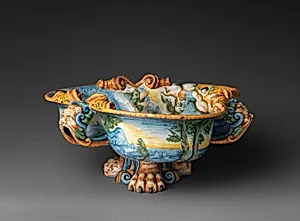
Wine cooler with A Marine Triumph of Bacchus
ca. 1550–70
Medium
Maiolica (tin-glazed earthenware)
Dimensions
Overall: 9 × 19 5/8 in. (22.9 × 49.8 cm)
Classification
Ceramics-Pottery
Culture
Italian, Urbino
Department
European Sculpture and Decorative Arts
Museum
Metropolitan Museum of Art, New York, NY
Credit
The Friedsam Collection, Bequest of Michael Friedsam, 1931
Accession Number
32.100.368
Rights
Public Domain
Tags
Art Historical Context
This exquisite maiolica wine cooler, crafted in the workshop of Guido Dur around 1550–70 in Urbino, Italy, exemplifies the Renaissance mastery of tin-glazed earthen. Maiolica, with its opaque white tin glaze, allowed artists to paint vibrant, detailed scenes in rich blues, yellows, and greens, transforming everyday vessels into luxurious artworks. Urbino workshops like Durantino's were renowned for *istoriato* maiolica—narrative "painted histories" inspired by classical mythology—producing elite tableware for grand banquets. The cooler depicts a lively "Marine Triumph of Bacchus," the Roman god of wine, riding a chariot amid a fantastical seascape. Flanked by playful putti (cherubic children), mischievous satyrs, and swirling fish, the scene evokes Bacchus's joyous conquest of the seas, drawn from Ovid's *Metamorphoses*. Measuring about 9 by 19 inches, this functional yet opulent piece would have chilled wine at Renaissance feasts, blending utility with mythological splendor. Housed in The Metropolitan Museum of Art's European Sculpture and Decorative Arts Department (The Friedsam Collection, 1931), it highlights Italy's 16th-century ceramic innovation, where pottery rivaled painting in storytelling and color. A true gem for lovers of Renaissance revelry!