
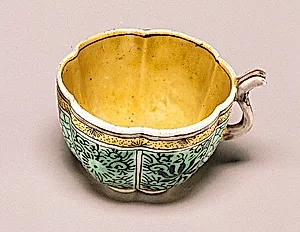
Wine Cup
Kangxi period, 1662/1722
Medium
porcelain with famille verte and famille jaune enamels on the biscuit
Dimensions
overall (without handle): 3 x 5.1 cm (1 3/16 x 2 in.)
Classification
Decorative Art
Department
CSD
Museum
National Gallery of Art, Washington, D.C.
Credit
Widener Collection
Accession Number
1942.9.579
Rights
Public Domain
Art Historical Context
This exquisite wine cup hails from China's Qing Dynasty during the Kangxi period (2–1722), a golden era of porcelain artistry under Emperor Kangxi's reign. Crafted from fine porcelain, it measures just 3 x 5.1 cm, perfect for intimate sips of rice wine or tea in scholarly or ceremonial settings. Part of the Widener Collection the National Gallery of Art it exemplifies the technical mastery and aesthetic refinement of imperial kilns at Jingdezhen, the porcelain capital. The cup's standout feature is its decoration in famille verte and famille jaune enamels applied directly to the biscuit—unglazed, matte-fired porcelain. Famille verte, with its vibrant greens, reds, and blues, evokes lush landscapes and floral motifs typical of Kangxi overglaze enameling, while famille jaune introduces rich yellows for a luminous glow. This layered technique, fired at lower temperatures, allowed for bold, colorful designs on a tactile surface, blending functionality with opulence. In Qing culture, such diminutive vessels symbolized elegance and connoisseurship, often adorning elite tables or altars. Its survival highlights porcelain's enduring global appeal, bridging East and West as prized export wares. Visitors, imagine cradling this delicate treasure— a testament to centuries-old ingenuity!
About the Artist
Chinese Qing Dynasty · 1644–present
"Chinese Qing Dynasty" serves as a collective attribution in museum collections for anonymous artworks produced during China's Qing era (1644–1912), encompassing the works of imperial workshop artisans rather than a single individual. These creators operated primarily from the imperial kilns at Jingdezhen, where potters, painters, and enamellers collaborated under strict court oversight, though sp...