
Woman's robe with peonies and shou medallions
Unknown Artist
late 19th–early 20th century
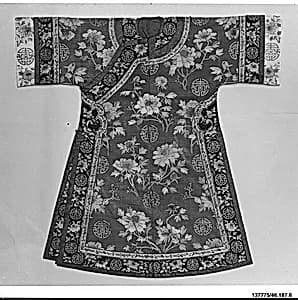
Medium
Silk and metal thread tapestry (kesi)
Dimensions
52 x 48 in. (132.08 x 121.92 cm)
Classification
Costumes-Tapestries
Culture & Period
China · Qing dynasty (1644–1911)
Department
Asian Art
Museum
Metropolitan Museum of Art, New York, NY
Credit
Gift of Captain and Mrs. James Thach, 1946
Accession Number
46.187.6
Rights
Public Domain
Tags
Art Historical Context
This exquisite woman's robe from China's Qing dynasty (1644–1911), dating to the late 19th or 20th century, the opulence of elite fashion through its silk and metal-thread tapestry weave known as *kesi*. Measuring 52 x 48 inches, the garment features vibrant peonies—symbols of prosperity and feminine beauty—and *shou* medallions, auspicious emblems of longevity. The *kesi* technique, a labor-intensive process where wefts are slit to create distinct color areas without painting, allowed for intricate, pictorial designs akin to painting on silk, reserved for high-status robes. Worn by women of the imperial court or wealthy families, such robes reflected the Qing era's emphasis on harmony between nature and longevity, with peonies blooming eternally alongside *shou* motifs. Tapestry-woven costumes like this bridged clothing and fine art, demonstrating masterful control of metallic threads for shimmering effects under candlelight. Today, this gift to the Metropolitan Museum of Art in 1946 invites us to appreciate the Qing's fading grandeur, just before China's dynastic end, preserving a slice of cultural splendor in the Asian Art collection.