
Worker Shabti of Henettawy (C), Daughter of Isetemkheb
Unknown Artist
ca. 990–970 B.C.
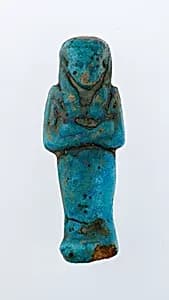
Medium
Faience
Dimensions
H. 11.4 x W. 4.3 x D. 3.2 cm (4 1/2 x 1 11/16 x 1 1/4 in.)
Classification
Shabti, Henettawy C
Period
Third Intermediate Period
Department
Egyptian Art
Museum
Metropolitan Museum of Art, New York, NY
Credit
Rogers Fund, 1925
Accession Number
25.3.19.103
Rights
Public Domain
Art Historical Context
This delicate faience shabti, standing just 11.4 cm tall, served as a "worker" figure for Henettawy (C), a high-ranking priestess and daughter of Isetemheb during Egypt's Third Intermediate Period (Dynasty 21, ca. 990–970 B.C.). In ancient Egyptian belief, shabtis were magical servants buried with the elite to perform laborious tasks in the afterlife, allowing the deceased noble rest. Crafted from vibrant blue-green faience—a glazed composite of quartz, lime, and clay—this small statue exemplifies the period's refined technique, where intricate details like hieroglyphic spells on the body activated its eternal service. Henettawy's shabtis reflect the Theban elite's opulent funerary customs amid political fragmentation, when priestly families wielded immense power. The meter's modest size and worker pose—hoisting a hoe and grain basket—highlight mass production for tombs, yet the glossy faience glaze evokes the Nile's life-giving waters, symbolizing rebirth. Acquired via the Rogers Fund in 1925, this piece from the Metropolitan Museum of Art offers a tangible glimpse into Dynasty 21's spiritual ingenuity, blending artistry with profound cultural faith in immortality.